
Life is hard if you want to outperform average.
To reach a USTA 5.0 level in tennis takes an endless amount of practice. To get promoted to Managing Director in banking, you first have to survive a decade of 70+ hour weeks just for a shot. And if you want to be your own boss and build something sustainable, you may have to grind through your day job and then grind some more on your business after hours.
So here's my question: are some of us genetically predisposed to enjoy the suffering more than others?
Instead of wanting to play life on easy mode, some of us choose to get beat up left and right. Because if we finally grind it out to the end and pass, the satisfaction is immense. Conversely, when something is just handed to us, there's no satisfaction at all. It's like being born rich, having your parents cut a fat check to their fancy alma mater so you can get in, and then calling yourself self-made. Not exactly a thrill.
I'd like to think most of us would rather struggle for an extended period of time, just for the satisfaction of knowing we did our very best. And the more we love to suffer, the sweeter the reward if we ever make it out the other side.
I've long believed you cannot fail if you never quit. It's a mantra I've carried since 2009, when I started Financial Tips convinced I was about to get blown out of my banking job. The world was in dire straits and I thought I'd lose everything I had spent a decade building.
Turns out that mantra applies to a lot more than careers. It also applies to an 11-year-old car with a mind of its own.
The Start Of Something Hard And Frustrating
Around October 2025, my then 10.5-year-old car started throwing electrical gremlins. This was after two consecutive years of going to the mechanic for some $1,000 – $1,500 problem.
One morning a low battery light came on. Strange, but the car started fine. The light kept reappearing until a more ominous message showed up a week later: “System Will Shut Down In 1 Minute.” Holy crap.
I took it to my local mechanic and had them swap the auxiliary battery and the main battery, which they had already replaced five months earlier. Problem solved, I figured. Nope.
All through November and December, the low battery warning kept coming back. So I started taking longer drives, evening drives, anything to feed the battery enough juice for the next cold start. Sometimes it worked. Most of the time, the warning kept coming on. But at least the car still ran.
Then we left for Hawaii for two weeks to see my parents in December, and the car sat untouched. When we returned, it was stone dead. The alarm had died, I had to manually unlock the door, and roadside assistance came to jump it.
Note: If you want to achieve financial freedom sooner, join 60,000+ others and sign up for my free weekly newsletter. I've been writing about FIRE since 2009, and everything is written based off firsthand experience.
New Year's Day is when the real fun began.
After idling for 30 minutes, I drove to the O'Reilly Auto Parts store 17 minutes away, where the car promptly died the second I turned it off. I bought a $100 electronic jumper. Didn't work.
Roadside assistance came back and jumped it with a 2,000-amp monster. So I marched into O'Reilly and bought the most powerful jumper they had, 1,000 amps, and drove around the block feeling confident. Then it died again. At a stoplight. Panic.
I ripped open the jumper box, popped the hood in the rain, jumped the car, rolled into a parking spot, and sat there for 40 minutes too terrified to move. The last thing I wanted was to die on the highway.
Eventually I worked up the courage to grab lunch two miles away, left the car running while I picked up the food, and finally made the 15-minute highway drive home. My wife and kids were safe at home while I spent four hours of New Year's Day fighting a car. Happy 2026.
That night, fingers crossed, I let it idle, drove it around, and parked it. The next morning it started. Phew!
Home Clear For The Next Six Months
For the next six months, the car fired up every time. My theory is that the two-week shutdown in Hawaii somehow reset an electrical module that had been staying on overnight and draining the battery. I logged every symptom and asked ChatGPT for advice along the way, which cheered me on like a personal trainer the entire time.
Then around April, new gremlins came back, one by one, like a horror movie sequel nobody asked for.
First the rear right door wouldn't open from the inside. That seemed dangerous if we got into a crash and my kids had to get out. A few weeks later the rear right window wouldn't roll down from the driver's controls. Then my son rolled that same window down from the back seat and it refused to go back up. What on earth was going on?
Then the coolant started flooding my driveway, six months after I'd paid several hundred dollars to replace a coolant hose. Back to the mechanic. And right on cue, the check engine light came on too. At that point I was just laughing. But I looked on the bright side: the car had gone six whole months without a major problem.
My local mechanic replaced the thermostat and some hoses for $1,050, which stopped the leak. But they recommended I take it to the Land Rover specialist for the check engine light, since they'd worked on it before. Fine.
Fixing The Check Engine Light Plus An Inoperable Window And Door
At the specialist, he fixed the check engine light (evap leak) and replaced some parts for about $800. Not bad. Two hours in, he called and asked if I also wanted the window and door fixed for another $1,500. He could get the parts in that day, and his shop was nowhere near my house, so I said sure. What's another $1,500 on top of $800?
Let's hemorrhage more money, baby!
I picked up the car with everything working. Wonderful. $3,350 (including the $1,050 to fix the coolant) was still cheaper than $100,000 for a new Range Rover Sport. I felt frugal and responsible.
Now I could go home and show my kids that when something breaks, you don't just toss it and buy new. You try to fix it, save money, and cherish what you have.
Woke Up The Dormant Electrical Gremlin
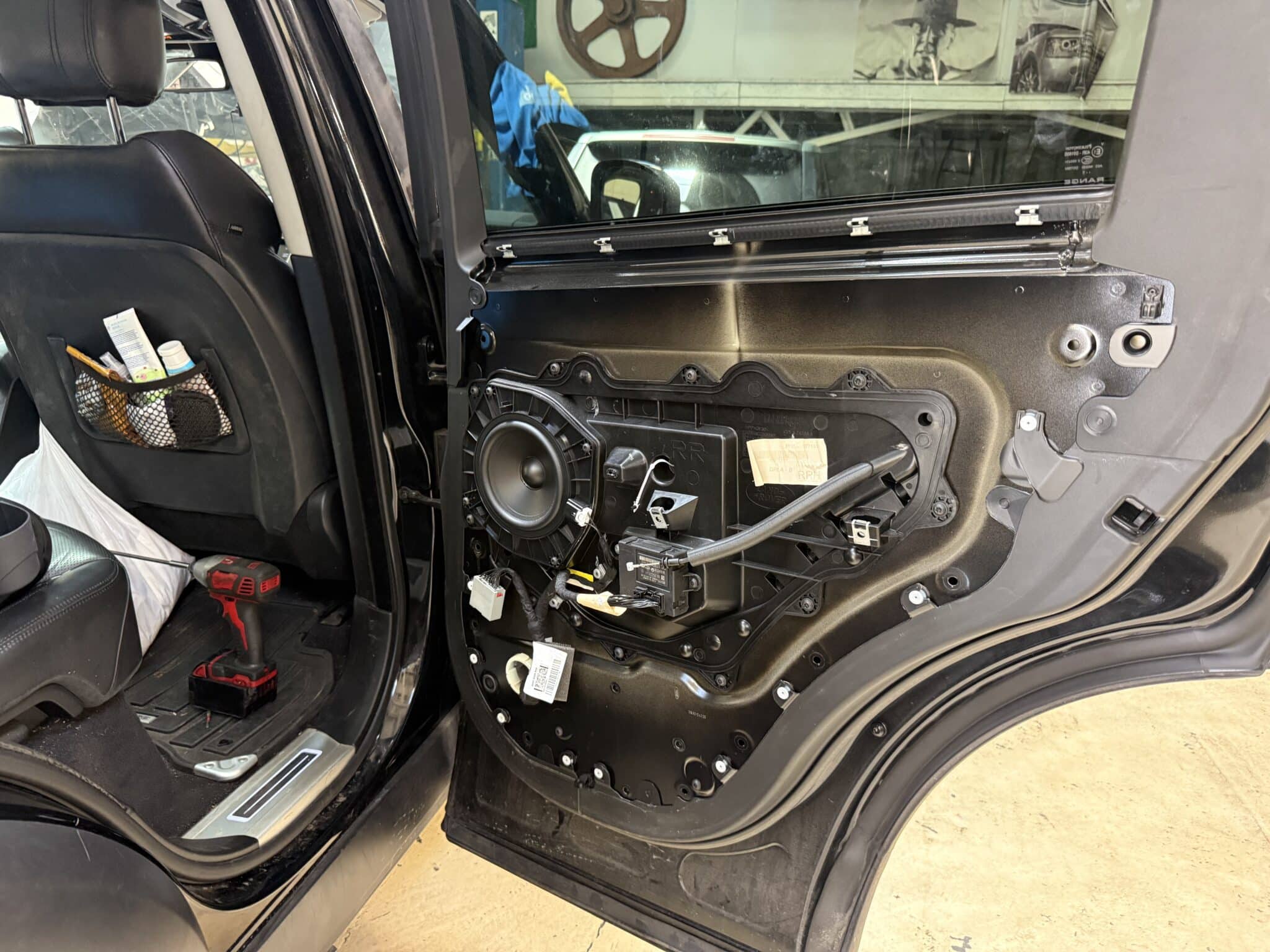
The very next day, my worst nightmare returned: low battery warning, system will shut down in one minute appeared. Nooooo. Somehow, fixing the window and door had poked the electrical gremlin awake.
Back to the shop the next day, a Thursday. He unplugged and reset the battery, and also inspected everything. Another 2.5 hours of my life, but the drive was only 22 minutes. I grabbed a coffee at the nearby BMW dealer, and got some writing done on my laptop. I picked the car up just in time to grab my kids at 11:35am for a half day end of the school year, then we drove 20 miles to the Bay Club for an afternoon of tennis and swimming.
Running great again. Until that Friday at 10pm, when I went out to start the engine and write my newsletter, and found the car unlocked. I never leave it unlocked. The right rear window wouldn't go down, and the car wouldn't lock. It would beep, then double-beep, refusing to fold in the mirrors.
The next day, the low battery light was back. I had to wait until Monday to bring it in. Ugh.
About To Give Up And Buy A New Car
Monday was my birthday. Not how I planned to spend it. So I made the most of it.
We dropped the kids at camp, my wife and I went on a lunch date at Manora's, the same Thai restaurant we went to when we first moved to San Francisco in 2001. Then we walked a mile to Books Inc to scope out the latest finance and parenting titles, since I'm working on my new book, Your Children Will Be OK.
Then we made a mistake as minimalist retirees. We walked up to the Land Rover dealer on Van Ness street and test drove a new 2026 Range Rover Sport.
It was incredible. Black on black on black with 23-inch rims, my exact desired combo. Now I knew exactly how much smoother the new version drove. I was this close to YOLO-ing it out the door for $98,500, about $10,000 cheaper than 2025 thanks to looser inventory.
I almost never buy anything for myself. Only for my wife and kids. So why not finally treat myself after all this aggravation, especially on my birthday?
I could buy almost any car I want with cash. But that would be too easy. It's like buying your way onto a World Cup team instead of earning the spot. Where's the fun in that? Bring on the challenge!
My rational brain took over. I'd just spent $3,350. I wanted to know if the specialist could actually fix the problem first. And if he had, I wanted to at least get some value out of it.

The Final Fix, For Now
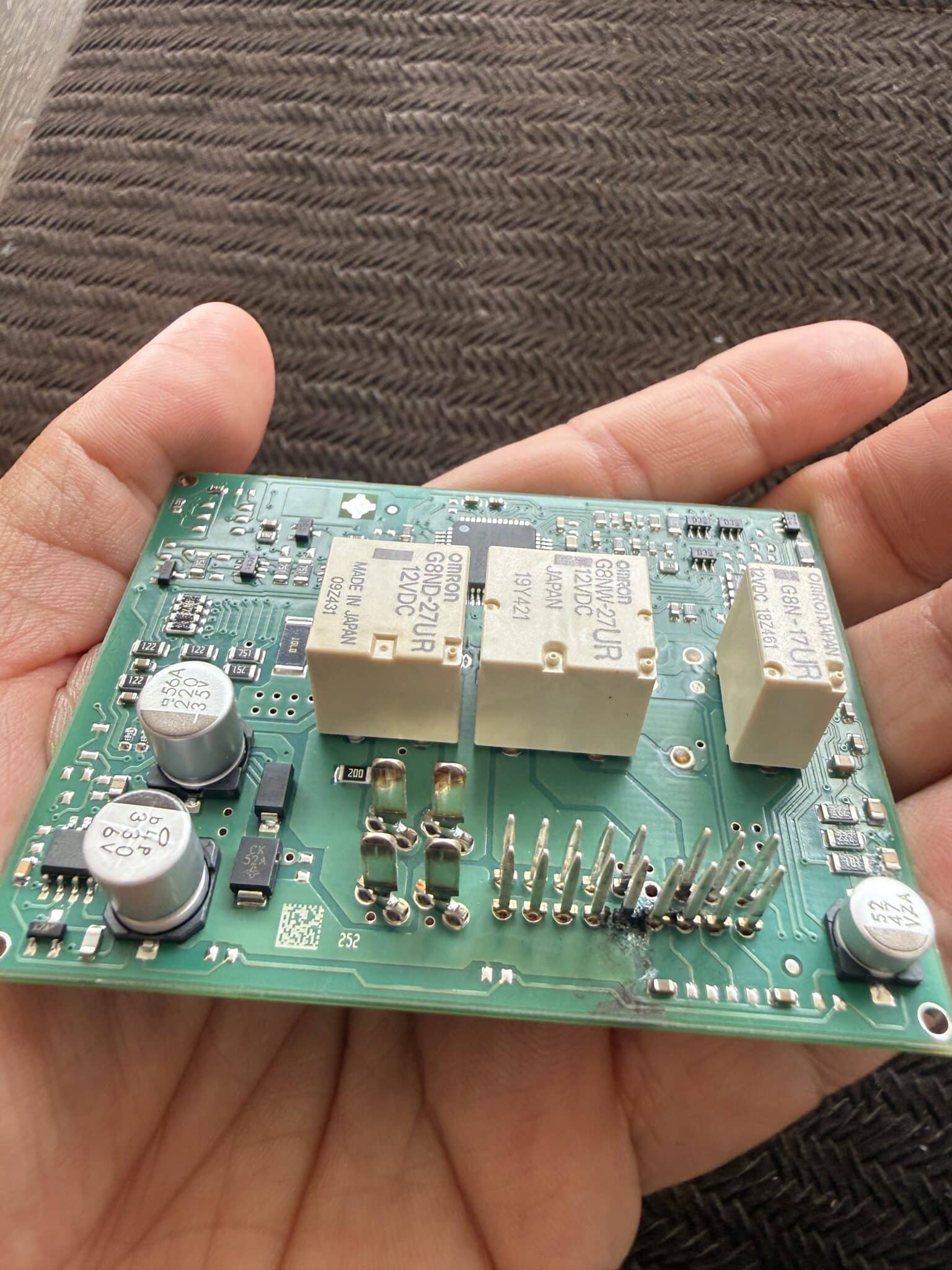
Jack the mechanic called at 3pm. He thought he'd finally cracked it. He inspected the rear right door module and found some of the prongs were burnt. So he swapped in the identical module from his own car, and the window and door lock came back to life. With medium conviction, he said the new module may have fixed the parasitic drain too.
He handed back my key fob, which he'd replaced with a new one, and told me there was no charge for the door module work. Amazing! I told him I'd drive it until I leave for Hawaii again, and worst case it dies while I'm gone, the gremlin hopefully resets, and we're back in business. He said OK.
Good news: it's been eight days, seven consecutive cold starts, zero low battery warnings. The windows work, the doors work, no check engine light, the car locks. Hallelujah! Off to to school and then Great America we go!
All I ask now is another six months or 3,500 miles before the next $1,000+ bill. If it's a big one, I may finally buy new. The car is 11.5 years old with only 71,000 miles and a ton of fresh major parts: new water pump, cooling system, thermostat, batteries, door module, door latch, window switches, and two new rear tires.
But at this point, the satisfaction of finally nailing the electrical culprit outweighs every dollar I torched getting there.
But Buying New Isn't A Magic Escape Either
Here's the part people forget when they fantasize about ditching an old car: new things break too.
In 2017, I bought a brand new Honda Fit. Smelled great, drove great, zero problems. Until 2019, when it developed starter problems. Two years. A brand new car. So spending $100,000 to make your problems disappear is often just spending $100,000 to inherit a new, more expensive set of problems.
The grass isn't always greener. Sometimes it's just freshly painted over the same dirt.
The Real Lesson Is Grit
How many of you would have given up long ago and bought a new car after three straight years of repairs on an 11-year-old vehicle? I talked to a school teacher, and she was shocked I would drive such an old car and spend so much fixing it. She and her husband just bought two new Teslas.
Even with sunk cost fallacy in mind, some of us keep going like madmen despite all the pain and suffering. With my defiant attitude, I refused to relent until the car problem was solved.
More than the money, I wanted to demonstrate some grit to my kids.
Grit may be the most underrated skill in life, and the most teachable. Here's why it matters so much.
Consistency can be controlled. You decide whether you show up. You decide whether you keep going after the low battery light comes on for the fifth time. The people who win aren't smarter. They just refuse to stop.
Get comfortable being uncomfortable. The first time the car died, I panicked. By the last time, I was chill, knowing exactly how to jump my car without hesitation. You don't get calmer by avoiding hard things. You get calmer by sitting in the discomfort long enough to learn the patterns.
Problem solving compounds. Every gremlin I diagnosed, every symptom I logged, every conversation with a mechanic made me a little better at the next one. Grit is what keeps you in the game long enough for that compounding to happen across many activities.
Life guarantees us hard times. The job loss, the health scare, the market crash, the business collapse, the relationship that falls apart, the dead car on a rainy New Year's Day. You don't get to opt out of the suffering. The only thing you control is whether you fold or keep moving when it shows up.
Developing Better Financial Habits
Part of the reason I created the House to Car Ratio is because of my father. When I was in middle school, he drove a paintless 1976 Datsun with a couple of missing hubcaps. Despite living in a nice government provided house as a U.S. foreign service officer, the car was junky and embarrassing to be seen in.
That embarrassment ended up being a blessing. It taught me early on that cars are depreciating assets and helped keep my car spending in check after my 20s.
So my hope is that when my kids are adults, they remember this ridiculous car gremlin saga.
I hope they fix what they have instead of replacing it on a whim. I hope they put in the work on their marriages before ever calling it quits. May they weigh the opportunity cost in both directions. Hopefully they better appreciate what they have, given they will better understand that everything gets old and breaks down eventually, including the car, the house, and us.
They already come with me to fix up our rental properties during tenant turnover. Now they've watched a three-year battle fixing a single car. If this experience lowers their odds of blowing money on a depreciating machine someday, the gremlins were worth it.
You cannot fail if you never quit. Even when the car really, really wants you to.
Readers, Over To You
How many of you would have given up and bought a new car by now, and how many would have kept fixing it? Where's the line for you between frugal persistence and just throwing good money after bad? Have you ever bought something brand new to escape your problems, only to inherit fresh ones, like my poor Honda Fit? And for the parents reading: how do you teach grit to your kids in a world that makes replacing things so easy? I'd love to hear your stories in the comments.
Recommendations
Before deciding whether to fix or replace anything big, it helps to see your entire financial picture in one place. I've used Empower's free financial tools since 2012 to track my net worth and spending. When you can see exactly how much a $98,000 car would dent your finances, the rational brain wins the argument a lot more easily.
If you link over $100,000 in investable assets, you can also get a free portfolio review with an Empower professional. They'll flag blind spots you didn't know you had, and small changes compound over time. Here's my experience and how to sign up. I've done so three times, and each time has been very helpful.
If you want to read more posts like this, join 60,000+ others and sign up for my free weekly newsletter here. I've been writing it since 2009, and it's the best way to achieve financial freedom sooner rather than later. Everything is written based on firsthand experience, because money is too important to be left up to pontification.

Sam,
I am a glutton for punishment too and would also keep trying to fix it as I can’t stomach spending six figures on a new vehicle. Enjoy your time in Hawaii!
Jacob
Range rovers are always in the shop. I know several people that own them and guess what, always having problems and its expensive and hard to get parts. As a FIRE guys I just tell them buy a honda pilot or toyota highlander. These ladies that own (auto loan) these Range rovers will never learn.
I think Range Rovers are beautiful and definitely have that “classy” air. I admire them when I see them on the road, and I seriously considered getting a new one last year. Then I checked out the reviews in Consumer Reports. To summarize: not good, lots of problems over time. I ended up getting a new BMW X5 instead (much higher Consumer Reports ratings) and I love it.
And I know that’s not the important part of Sam’s story here, which is GRIT. But my take-away is YES grit is important, but only if you’re investing that grit in something worth being invested in (like writing and running Financial Tips for 17 years!!!) I think it takes a good bit of wisdom and discretion to know when that’s not the case.
That persistence can become expensive attention debt
Really enjoyed reading this one Sam! It’s a good reminder. I am still fixing a 2008 Mazda CX9 with 174k miles and Polar Bear still runs like a charm. He’s usually pretty cheap to fix and I keep saying one of these days it won’t be worth it and we need to replace him, but it hasn’t happened yet
One of the hidden benefits of struggle is that experiences requiring persistence often become family stories.
Nobody tells stories about the time Dad went to the dealership and bought a perfectly functioning replacement vehicle. There’s no lesson in that. It’s convenient, but it’s forgettable.
What kids remember are the moments when their parents face a challenge, refuse to quit, and eventually find a solution. Years from now, your children probably won’t remember how much you spent repairing the Range Rover. They’ll remember that Dad kept trying, finally figured out the electrical gremlin, and then proudly drove the car for a few more years because he wasn’t ready to give up on it.
In a world where it’s easy to replace almost anything with a swipe of a credit card, there is something valuable about demonstrating perseverance, resourcefulness, and respect for what you already own. The car will eventually be gone, but the story and the lessons behind it may last a lifetime.
I really enjoyed the story. That’s definitely a great set of examples of having grit and not just patience but also the persistence to keep trying to fix something. Problem-solving skills are so important in life and I think it’s great that you are demonstrating that skill set to your children
Yes! Problem-solving skills are crucial. The world can be a hard place, so the better we can endure how to solve problems, the better.
I definitely think there is a strong car relation with people who enjoy difficult challenges and success in whatever it is they wanna do.
A classic example is someone who enjoys the discomfort of working out or going for a run at 4:30 in the morning when it’s pitch black, or simply waking up early in the morning when it’s dark and everybody is sleeping.
These other people I want on my team who believe in the mission and will do whatever it takes to accomplish the mission.
I think people are fooling themselves if they think they can half fast something and still climb the mountain top. This is a Global business environment, where Honger or people from poor nations are happy to eat your lunch and take away all your success.
There’s grit, and then there’s repeatedly causing yourself inconvenience and annoyance when you don’t have to! The saga of your car continues!
I had a Mercedes once – the power steering pump died within a week of buying it. Then the fancy semi automatic gearbox failed at 70 mph on the motorway. It was towed back to the dealer and was fixed under warranty, but I should have rejected it then. In the end we traded it in for a much more reliable Honda…
If you’re into self flagellation, a Land Rover is amateur, go the whole hog and get a Maserati?! :-)
It’s OK to say stupidity!
The thing is, I have learned to love the difficulty and hard problems. So it becomes a game, a fun challenge to try and figure out the solution.
The irony is, when I had much less money, I wouldn’t have been able to afford it to problem solve for so long. But now that I have the money, I don’t find it satisfying to just give up and buy a new car. In my mind, surely all the bigger issues will eventually fade as they get replaced in a new 10 year Cycle starts again.
Related: Don’t Let Pride And Honor Keep You On Hard Mode Forever
I get that attitude and I am the same in some respects. But you will never make a Land Rover a reliable vehicle, even if you replace every part. Some (many!) of them are just engineered badly.
There’s a phrase “throwing good money after bad”. If you had no history with this vehicle, and had just had a big bill, knowing the brand reputation, would you think it was a keeper worth investing many more thousands in maintenace or repairs into… or another example of a Land Rover lemon that should be traded in for something (anything!) more reliable?
For me the satisfaction of getting into a car and it starting first time every time for year after year validates that I bought the right vehicle. Turning the key and wondering “did what I do last time fix the problem, or have we got a new one today?”, not so much…
I look forward to the next installment!
Sounds good to me. I feel that way 99% of the time I’ve owned the vehicle for the past 10 years. But I think, unlike most people, they don’t write about when things break.
What car do you drive now? And if you’ve driven them for 10 or 11 years+, have they held up quite well? I welcome new car purchase ideas as I like to own them for a while.
Toyotas – never let me down. There’s a reason every million miler in Afghanistan is a Hilux.
Also a BMW i3. Only had that one a little while but there’s not much to go wrong, the battery management is very conservative, and there’s many out there with 200k+ on them and still going. The main thing that results in them being retired is a collision – the carbon fibre chassis is almost impossible to repair.
Good luck with the car hunt.
I’ve been a longtime reader of your blog, and after so many posts about your Range Rover breaking down, I think it may be time to let the SUV go.
I used to own a 2004 Jaguar XJ8 with more than 280,000 miles, which I kept for 16 years. Over time, I spent thousands of dollars on repairs, especially after it passed the 10-year mark. I knew I was falling into the sunk cost fallacy, but the final straw was when I couldn’t pass the smog test without spending more than the car was worth — around $2,500. I eventually sold it as-is in 2022 and bought an EV, a Hyundai Ioniq 5. It was the best decision I ever made.
No more maintenance headaches, no more gas, and operating costs are near zero. We recently bought a second-hand Kia EV6 for my wife at about half the price of a new one, and we couldn’t be happier. With a one-year-old daughter, we’ve found that safety, environmental responsibility, and long-term cost savings all point us toward EVs for the future.
I hear you on not passing smog and fixing more than the cost of the. car. That was the same situation that happened to me in 2017 with my 16-year-old Land Rover Discover II that I owned for 12 years.
I enjoyed it a lot, but to fix the Three Amigos lights that were on to pass smog would cost more than the car, so I traded it in for a 2017 Honda Fit that I leased for $240/month. It was great, but the starter problems started occurring in year 3. And not being able to start a newish car is the worst.
I’ve only got 71,000 miles on my RRS, and now many of the big parts are fixed. I’ve had it inspected multiple times by two shops due to all these fixes, and they say it’s in good shape. But maybe end of this year or early 2027, I’ll finally get an EV since I have a built in Tesla charger in my garage and solar.
Consider something besides a Range Rover next time. RRs are ranked Lowest or near lowest ranking in reliability for SUVs. As I’ve approached and passed my mid-40s, I just want my cars to WORK.
Thank you for your suggestion. How has your 11 year-old car held up and what type of things have you had to replace for it?
Do you have any examples of grit, why are you kept on going when most people would have given up?
Had to replace a windshield, which led to automated wiper sensor not working — hate it, but didn’t fix it, the $1K+ cost isn’t worth it. It’s an irritation when it rains, but when I replace the car, will be that much sweeter.
The other issue – found on this model of Subaru was that the battery would drain after not being used for 3-4 days. After many replacements – got the batteries from Costco, so only one time cost – found the issue was due to a known problem on the car. The Eyesight system (active lane assist) would continue to draw power even when car was off. Subaru replaced the electrical module under warranty even at 10 years and a few months old. Next time we get a new or gently used car will be a model from Subaru, Lexus, Toyota, Mazda, or Honda.
As far as grit goes….I look to you as an example of that. It takes a special talent to keep writing daily, and only within the last 5(?) years, shifting to a three updates a week model. I look at my dad who went through career one, retired after 30 years, and then went through a completely different career to stay busy and finally retired from THAT after 30 more years.
I love the look and feel of a Land Rover, but the reliability issues always scared me. Multiple family members that spent their career in automotive repair always reiterated Land Rovers have electrical issues. Seems that unfortunately is still the case.
Per Consumer Reports: Land Rover models rank poorly in Consumer Reports reliability and owner satisfaction rankings, frequently landing near the bottom of brand lists. The brand is also cited as having the highest 10-year maintenance and repair costs in the industry, often compounding to over $19,000 for a decade of ownership.
The continuing saga of your car is my favorite ongoing story on the whole site. Every time I think this is the time you actually do it.
I am a regular visitor of your website and Implement what you propose most of the time. I am not so sure about this one. Lesson in Grit would be a Marathon run or 20 mile hike or 100 mile bike or 300 lbs squat or clearing CFA exam. I am not so sure if this was best financial move. I see your suffering and to begin with i will never purchase a car that is known for all the issues. I will always purchase 2-3 year old Toyota or Honda. I never had any such problems with cars costing 20% of what you paid. Granted you might have more money and can afford to make such an mistake. Having said that yes this does demostrate your grit. However In my experience i have made some decisions based on these instincts (never give up, grit) that turned out to be wrong in long run when i sit down and calculted the actual cost.
All good. That’s the point of the post. There’s all types of ways to demonstrate grit beyond the physical ones. Once you have grit, it applies to almost everything.
The financial benefit is definitely now murkier after 10 years of ownership and spending $3,350 this year fixing. If it gives me at least six more months of trouble-fee driving, it will be worth it.
But beyond the Financial it feels incredibly satisfying to finally found the culprit to the Electrical gremlin.
That’s awesome you pay $11,000 or less for your cars (mine was $56,000 purchased versus $72,000 new X your 20%). What year and make do you drive? I am a big proponent of people following my 1/10th Rule for Car Buying.
I hope my children will learn from this ordeal as well. I keep the door module on our dining table as a reminder to never give up.
It seems to money equals freedom. A car is a safety issue and i would bite the bullet and buy a new or pre owned one bc what good is the money if you are stuck on the side of the road? Just my 2 cents.
True. Thanks for your suggestion.
There might be a lot of unsafe cars out there given the median car age on the road is now around 13 years.
But I have fixed every car problem as soon as they arise due to safety.
What are some examples of not giving up that gave you great satisfaction?
I purchased used toyota corolla for 6000 in 2004 when i came to the country and drove it for more than 12 years . Later purchased used honda accord. my current car is rav4 prime (first new car i purchased in 2021 after i came to country in 2004). I bite the bullet for a new car back in 2021 because fuel savings it offer with electric charge (first 50 miles) and $7500 Federal rebate, 2000 NJ rebate and 1% interest rate. I know i can spend less where i don’t do well is making more money or invest it wisely so that it grows.
Cool. If you enjoy Corollas and RAV4s, that’s all that matters. I enjoyed driving my Honda Civic when I first got to San Francisco in 2001.
I think at the end of the day, if folks who want to achieve financial independence, follow on my 1/10th rule for car buying, and still enjoy the car they purchased, that’s a huge win.
Where are you on your Financial independence journey now?
my financial journey is nothing to write home about. I own one rental property in PA and one primary residence in NJ. I have started investing in 2008 close to the bottom of market. I made many mistakes since then and did not ride the tech boom that follow. I am still doing 9-5 grind. I have only 1 Daughter she is in college now. I have enough saved up for her college in 529 account, made terrible mistakes (trading with my own 401k accounts hence the grind even though i have crossed 50. I am seriously considering liquidating my portfolio and buying another rental property. I know you like real estate as well.
Thanks for sharing. I’ve made plenty of mistakes as well, and have telegraphed it here. My most recently mistake was buying Google at $380-$390 and watching it tank after Buffett invested $10 billion at $350. Ouch. Can’t win them all. But just got to keep going, diversify, and invest for the long term.
I don’t mind occasional preventative maintenance repairs that coincide with oil changes. But real problems out of the blue would annoy me too much. So far, so good with my 2019 82,000 mile Audi A5 Sportback that I bought new.